Smart production in small batches.

There are many reasons to produce your product in small batches. Most contract manufacturers are only interested in large quantities. Pilotfish helps companies bring products to market without requiring large production volumes from the start.

  • Lower upfront investment
  • Faster time to market
  • Reduced inventory risk
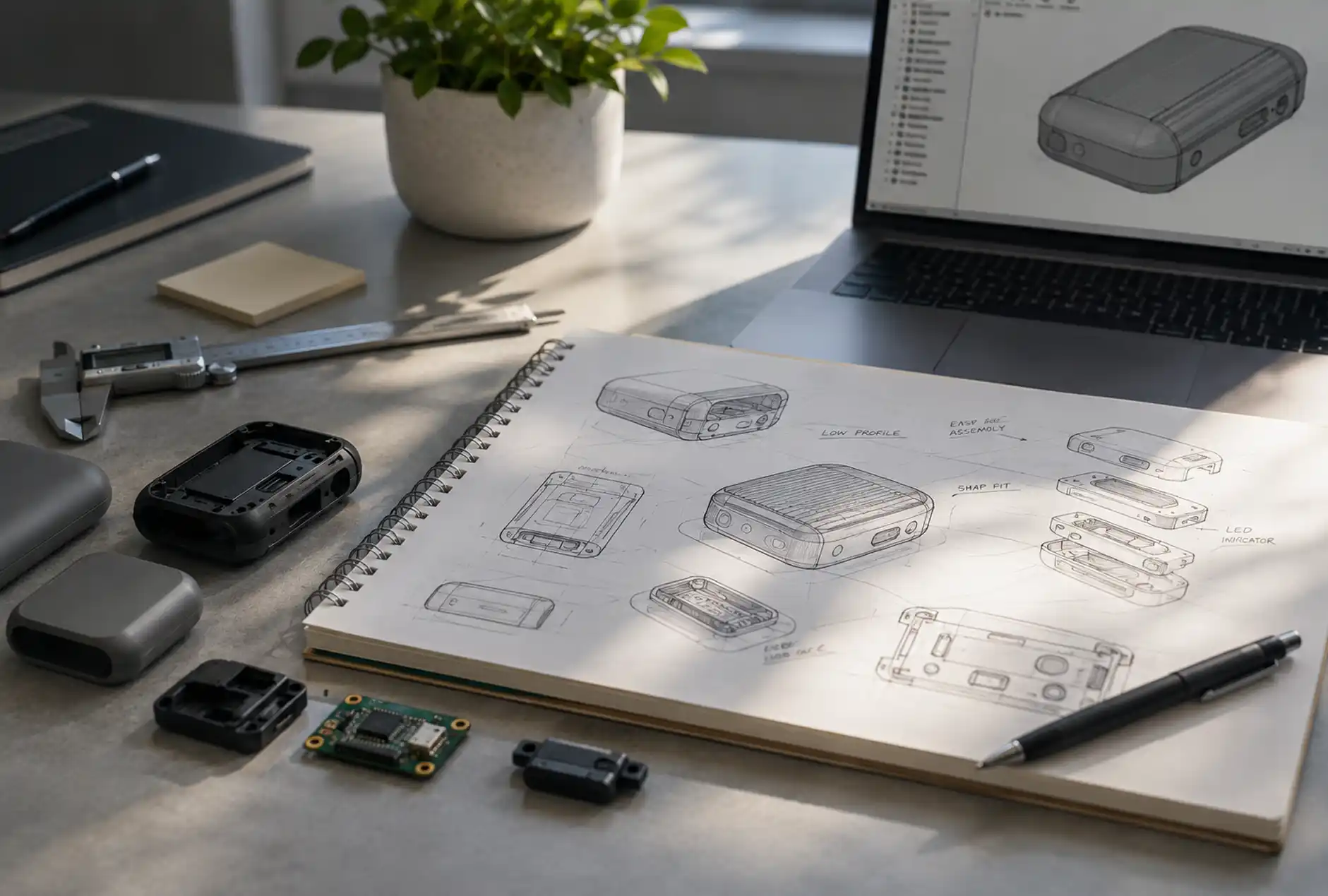
Designer’s desk with product sketches, a caliper, a laptop showing a device enclosure and small housings and a PCB
Made in Taiwan, managed by Pilotfish

Why small batches

Why produce in small batches?

Larger batch sizes usually mean a lower product price, as NRE, tool and overhead costs are divided across more products, with lower raw material prices and higher yield rates.

But TCO (Total Cost of Ownership) and TTM (Time to Market) matter too, making small-batch production the right choice in many situations.

  • Lower Upfront Investment
  • Product Flexibility
  • Faster Time to Market
  • Reduced Inventory Risk
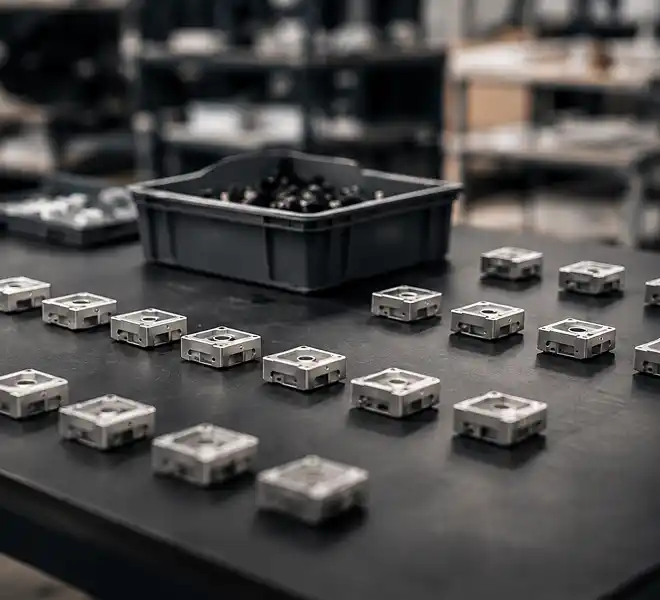
Rows of small machined aluminium housings on a workbench next to a crate of black parts
  1. 01

    Cash

    Large batches reduce the unit price, but require more upfront investment in components and stock. Small batches help preserve cash while testing the market and developing sales channels.

  2. 02

    Speed

    When time to market matters, there may be no time to build a complete production and assembly line. Small batches help you move from product to market faster.

  3. 03

    Time-sensitive

    Market demands and technologies can change quickly. Small-batch production gives you the flexibility to improve and adapt the product between production runs.

  4. 04

    Niche specialized market

    Specialized markets may require lower volumes without compromising on quality. Small batches make high-quality production viable even when you don’t need large quantities.

Our approach

How we make small-batch production work

  1. 01Product design
  2. 02Tools
  3. 03Assembly
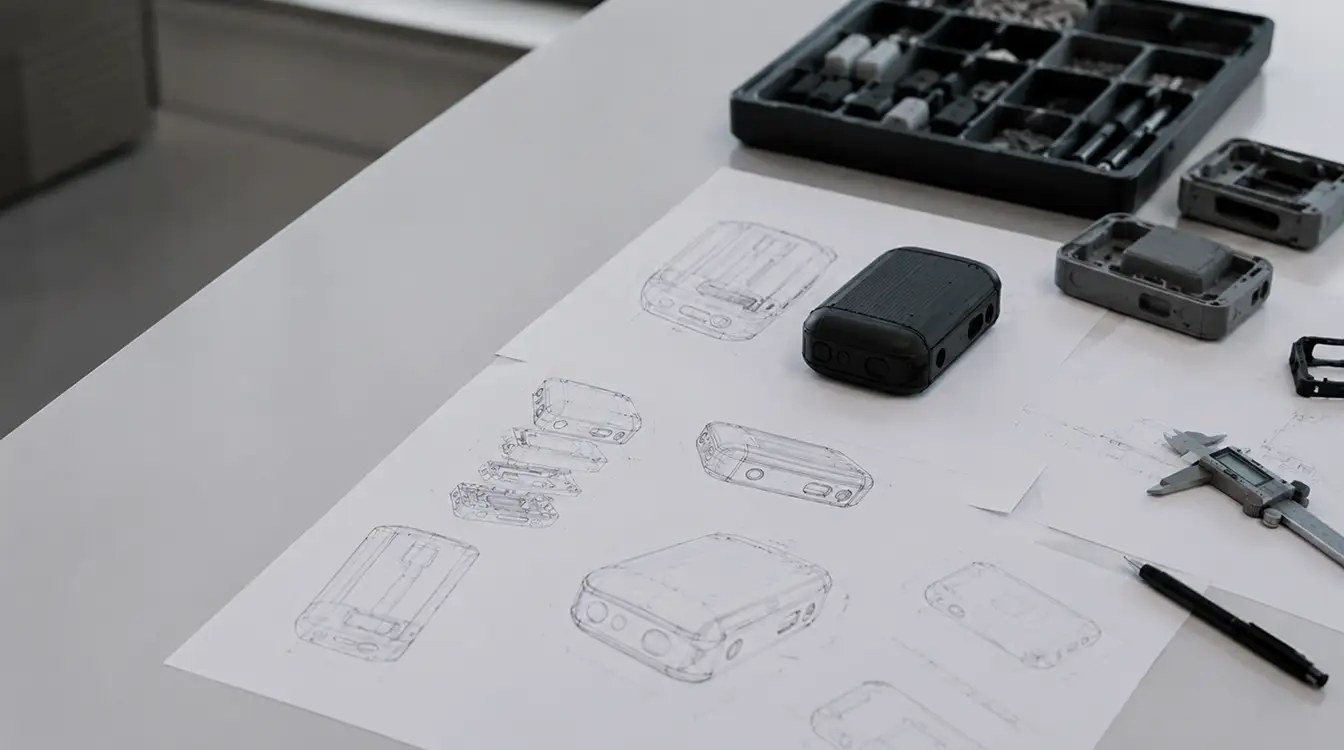
Product sketches on paper next to a black device housing, a caliper and a tray of components
Stage 01

Product design

It is important to have realistic forecasts when Pilotfish designs the product. Many design decisions are directly related to batch size and product cost.

  1. 01.1

    Scalable & modular design

    Design the product to be ready for future upgrades while reducing features in the first version.

  2. 01.2

    Low-MOQ components

    Select components and raw materials with low MOQs and, where possible, materials that are available from stock.

  3. 01.3

    Generic components & second sources

    Use generic components with a second source to reduce supply-chain risk.

  4. 01.4

    Simple housing assembly

    Design housings that assemble with screws, so the product does not depend on glue or snap-fit solutions.
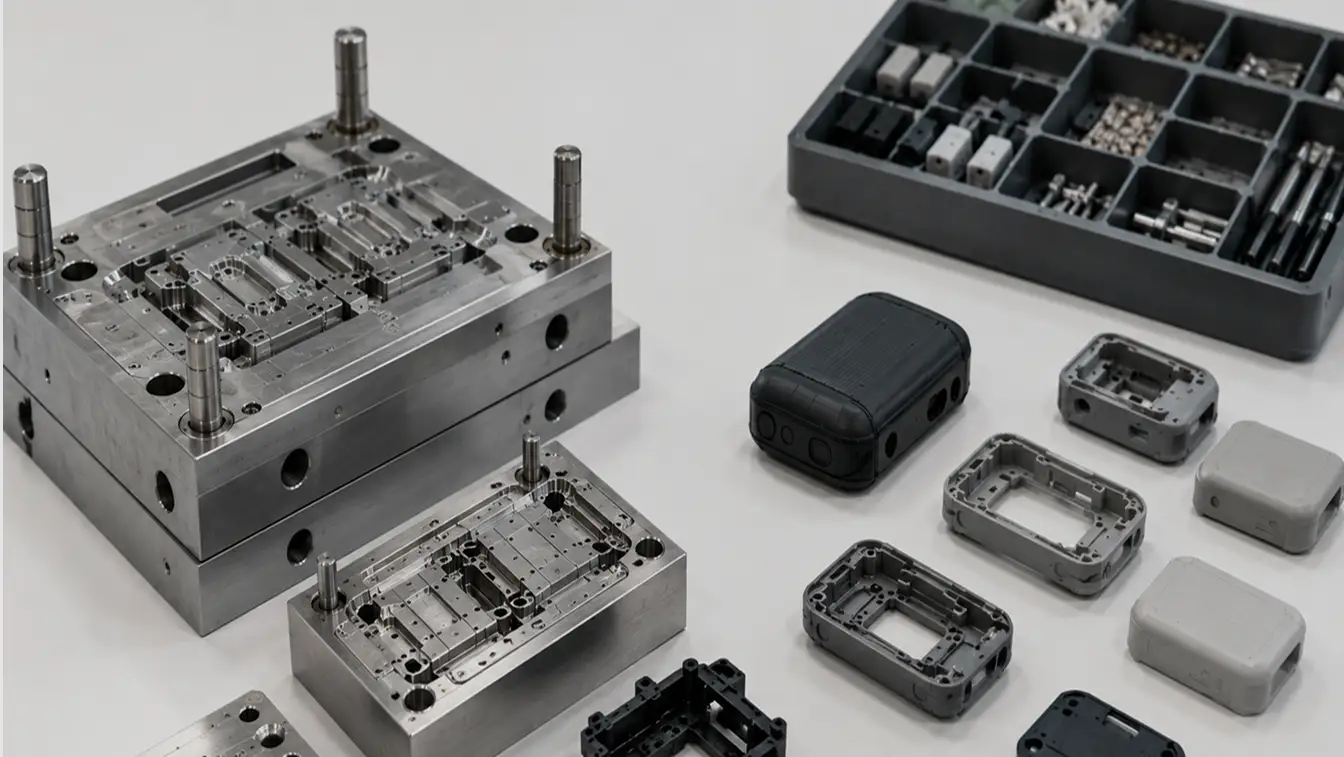
Steel injection mould halves next to moulded device housings and a tray of parts
Stage 02

Tools

For small batches, match the tooling to the expected production volume and skip the over-engineering for volumes you may not need.

  1. 02.1

    Rapid & soft tooling

    Use rapid or soft tooling to reduce upfront investment and shorten lead times for small production volumes.

  2. 02.2

    Match tool life to volume

    Choose tool life based on expected volume to reduce investment without compromising part quality.

  3. 02.3

    Multi-cavity tools

    Combine multiple parts in one tool to reduce tooling costs and simplify production.

  4. 02.4

    Avoid unnecessary tooling complexity

    Avoid complex processes like 2K moulding and overmoulding where simpler tooling can meet production needs.

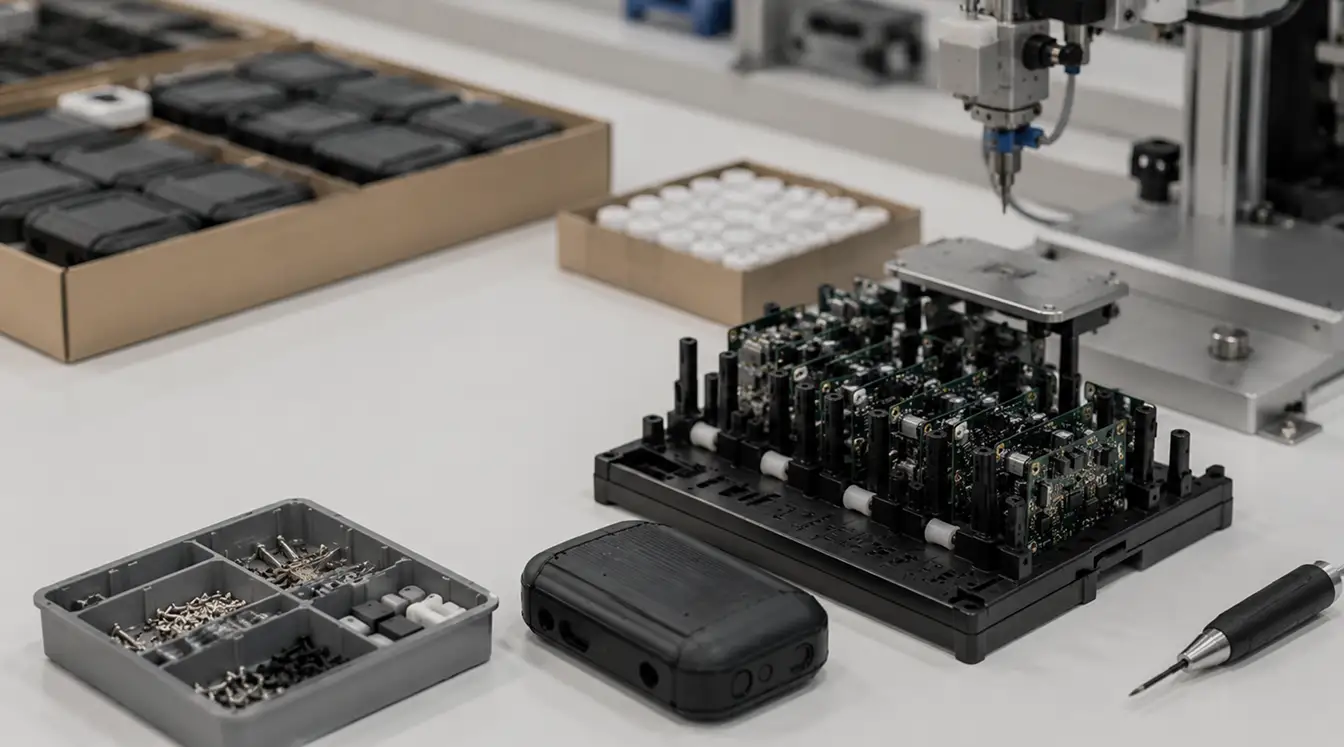
Assembly bench with a jig full of PCBs under a dispensing machine, trays of parts and a finished device
Stage 03

Assembly

For small-batch production, assembly should stay flexible. Manual and jig-assisted processes help reduce upfront investment while keeping production ready to scale as volumes grow.

  1. 03.1

    Manual & jig-assisted assembly

    Use manual and jig-assisted assembly to stay flexible and reduce upfront investment.

  2. 03.2

    Avoid early automation

    Avoid custom automation until production volumes justify the additional investment.

  3. 03.3

    Plan partial deliveries

    Purchase components in larger quantities while assembling and delivering products in smaller batches.

  4. 03.4

    Balance stock & batch costs

    Balance build-to-stock and build-to-order to reduce inventory and per-batch costs.

Manufacturing · Small Batch Production

Ready to produce in small batches?

Let’s discuss your product and find the right way to bring it to market.