
A Crisis That Accelerated Change
The Covid-19 pandemic forced businesses, governments, and societies to adapt at a speed few had anticipated.
Digital tools became essential almost overnight. Remote collaboration, online services, and digital communication replaced many physical interactions. Companies that once moved slowly were suddenly able to implement changes in weeks instead of years.
Research shows that many organizations accelerated digital adoption dramatically, with some implementing changes up to 20 to 25 times faster than expected.
What seemed impossible before became necessary.
The Innovation Paradox During Covid-19
Despite this rapid transformation, innovation did not accelerate everywhere.
In many industries, companies paused new initiatives and focused on maintaining stability. A “wait-and-see” approach became common, especially outside of sectors like healthcare and pharmaceuticals.
This resulted in what could be described as an innovation freeze.
At the same time, certain sectors experienced the opposite. Medical and pharmaceutical industries saw increased investment, rapid development cycles, and new forms of collaboration.
This contrast highlights an important reality.
Crises do not automatically create innovation. They create pressure and opportunity.
“Crises force organizations to make decisions faster and more decisively. The ones that continue to experiment and move forward are the ones that come out stronger.”
Why Crises Drive Innovation
A crisis removes the comfort of stability.
It exposes weaknesses, forces difficult decisions, and challenges existing assumptions. At the same time, it creates urgency, which can unlock new ideas and ways of working.
Innovation often happens when organizations are pushed beyond their normal limits.
During Covid-19, this was visible in:
- new collaboration models
- faster decision-making
- increased focus on real user needs
- rapid experimentation and iteration
What these innovations have in common is that they address real, immediate problems.
Four Shifts That Shape Innovation in a Crisis
Understanding how organizations behave during a crisis can help leaders respond more effectively.
1. Purpose Becomes Central
In times of uncertainty, clear purpose becomes a powerful driver.
Teams that understand why they are working on something are more motivated and more likely to contribute ideas. A strong sense of purpose can unlock energy and creativity across an organization.
2. Weaknesses Become Visible
Crises expose inefficiencies and structural issues that may have gone unnoticed.
This creates an opportunity to rethink processes, eliminate what does not work, and focus on what truly adds value.
3. Stability Gives Way to Flexibility
Traditional systems are built for efficiency and predictability.
But crises demand flexibility. Supply chains, production processes, and organizational structures must adapt quickly.
Companies that rely too heavily on rigid systems often struggle the most.
4. Speed Becomes Essential
During a crisis, long planning cycles are no longer viable.
Innovation shifts toward rapid experimentation. Ideas are tested quickly, feedback is gathered, and solutions evolve in real time.
This approach allows organizations to move forward even in uncertain conditions.
What This Means for Product Development
The pandemic has changed expectations around innovation.
Speed, adaptability, and user focus are now essential. Businesses can no longer rely on long, linear development processes.
Instead, successful product development requires:
- rapid prototyping
- continuous validation
- close collaboration with users
- flexible development strategies
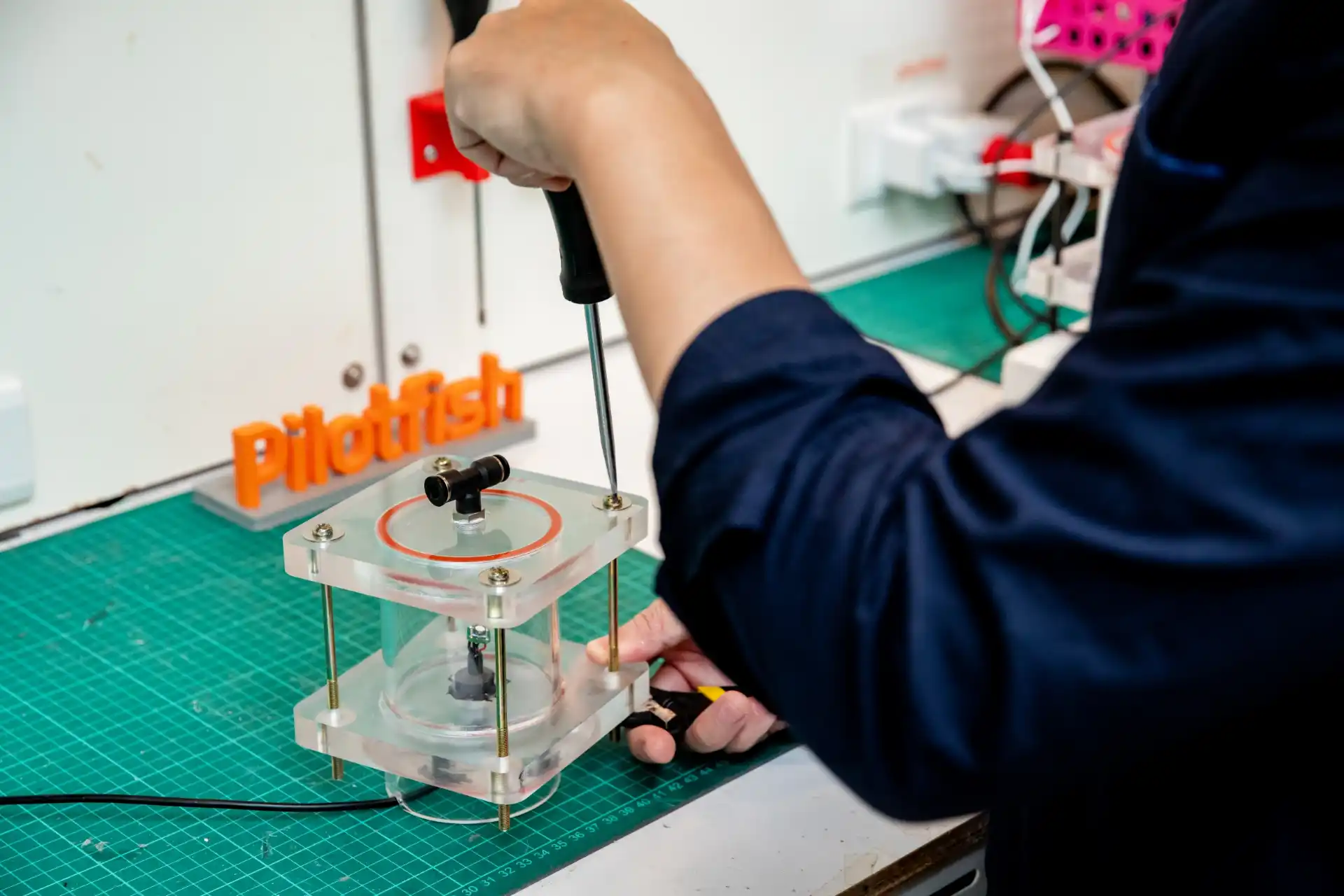
At Pilotfish, this approach is reflected in the use of design sprints, co-creation, and iterative development processes that allow teams to test, learn, and adapt quickly.